
National Roadmap for Sustainable Development 2030 reinforces innovation, sustainability and competitiveness
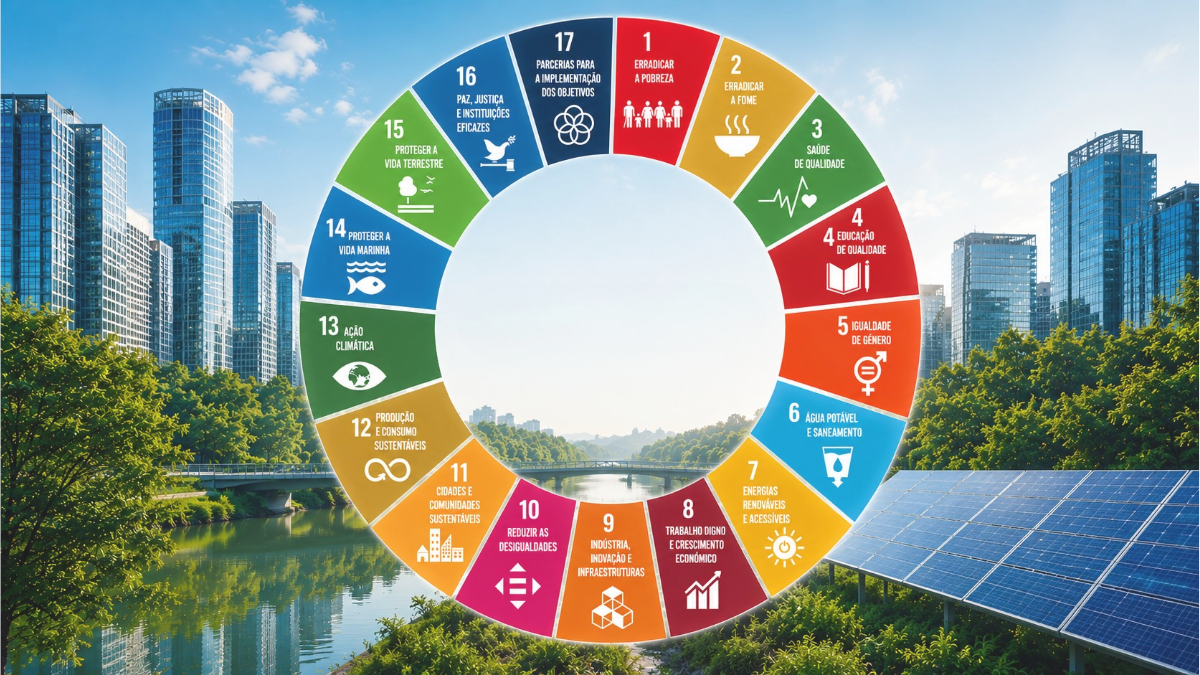
The recently published National Roadmap for Sustainable Development 2030 (NRSD 2030) sets out a strategic framework for implementing the 2030 Agenda in Portugal while strengthening the integration of the Sustainable Development Goals (SDGs) into national policymaking.
Developed under the coordination of the Centre for Planning and Evaluation of Public Policies (PLANAPP), the roadmap aims to improve coherence between public policies, investment programmes and Portugal’s commitments under the United Nations 2030 Agenda.
For companies, the RNDS 2030 provides an important strategic framework, reflecting the increasing integration of sustainability, innovation and competitiveness into public policy and, consequently, into the design of future national and European funding programmes.
A ROADMAP TO ACCELERATE SUSTAINABLE DEVELOPMENT
The National Roadmap for Sustainable Development 2030 is built around two key pillars: the Commitment to Sustainable Development, organised into six strategic transformations, and the Policy Coherence Plan for Sustainable Development, which seeks to strengthen the integration of the 2030 Agenda into public policy, enhance monitoring mechanisms and improve institutional coordination.
The six strategic transformations identified in the roadmap cover areas that are considered fundamental to Portugal’s sustainable development:
- Education, Skills, Innovation and Digital Transformation;
- Climate Action, Energy and Sustainable Water Management;
- Inequalities, Social Inclusion, Decent Work and Prosperity;
- Sustainable Communities, Mobility and Housing;
- Health, Sustainable Food Production, Circular Economy and Biodiversity;
- Justice, Peace, Cooperation and Strong Institutions.
The full version of the National Roadmap for Sustainable Development 2030 is available here.
INNOVATION AND SUSTAINABILITY AS DRIVERS OF COMPETITIVENESS
A central theme of the roadmap is the role of innovation, digital transformation and skills development in strengthening the competitiveness of the Portuguese economy.
The roadmap highlights that the transition towards a more sustainable development model will depend on organisations’ ability to invest in innovation, develop new technologies, improve resource efficiency and adopt more resilient business models.
This approach reflects the direction of European policy, which increasingly prioritises investments capable of delivering measurable economic, environmental and social impact.
A STRATEGIC FRAMEWORK FOR FUTURE FUNDING PROGRAMMES
The publication of the NRSD 2030 marks an important step in shaping the future direction of public policy in Portugal.
In recent years, programmes such as Portugal 2030, the Recovery and Resilience Plan (RRP) and a wide range of European funding instruments have increasingly incorporated criteria relating to sustainability, innovation, climate transition, the circular economy and digitalisation.
Against this backdrop, the National Roadmap for Sustainable Development 2030 is expected to influence the design of future investment support programmes, reinforcing the importance of projects aligned with the Sustainable Development Goals and with both national and European strategic priorities.
WHAT DOES THIS MEAN FOR COMPANIES?
For companies, the NRSD 2030 provides a valuable reference for strategic investment planning and the development of projects seeking public funding.
Sustainability is no longer viewed solely as a regulatory requirement. It has become an increasingly important factor in enhancing competitiveness, attracting investment and strengthening funding applications.
Projects focused on innovation, energy efficiency, the circular economy, decarbonisation, digitalisation and technological development are becoming progressively more aligned with the priorities set out in national and European public policies.
PLANNING AHEAD FOR FUTURE INVESTMENT OPPORTUNITIES
The publication of the National Roadmap for Sustainable Development 2030 reinforces Portugal’s commitment to develop a strategy centred on innovation, sustainability and competitiveness.
For organisations preparing investment projects, understanding these strategic priorities will be essential to developing initiatives that are better aligned with the criteria likely to play an increasingly important role in the assessment of future national and European funding applications.
HOW CAN H1ID SUPPORT YOUR PROJECT?
As sustainability becomes increasingly embedded within funding programmes, businesses must adopt a more strategic approach to project development.
H1ID supports organisations through:
- Assessing the strategic alignment of investment projects with national and European priorities;
- Identifying funding opportunities that match project objectives;
- Integrating ESG criteria and sustainability requirements into funding applications;
- Preparing the technical and financial documentation required to support applications;
- Developing feasibility studies and impact assessments.
Early preparation remains a key success factor. Well-structured projects aligned with national and European strategic priorities are better positioned to maximise the funding opportunities available.